If you’re eyeing the new Pixel 11 and wondering whether it’s worth your money, here is the honest rundown. Google didn’t try to reinvent the wheel for 2026. Instead, they took a great everyday phone, ironed out the annoyances, gave the camera some extra muscle, and leaned hard into practical software.
Sure, this isn’t designed to crush the competition in raw benchmark charts, but it is built to be a reliable, pocketable Android phone that makes daily life easier and lasts for years.
If you are a Pixel fan, sitting on a two or three-year-old Pixel investment, it’s time, you have a new home. If you are coming from an iPhone and want a much cheaper device, are open to an Android that’s fast, easy, simple and executes on the core mobile offer of a connected device that converges multiple devices into one, and still fits comfortably in a jeans pocket, this is a great option. If those pockets are deeper, then you should look at the Pixel 11 Pro or ProXL.
Personally I’ve been living with a Pixel 10 Pro XL for the past year as my daily driver and I did miss the screen size of my phone while using the smaller 11. This is definitely personal preference, but for me personally, I felt constrained when using a screen about 0.5″ smaller.

Design
At a glance, the Pixel 11 is very familiar, last year’s phone with a tidier rear. The silhouette keeps the flat-sided slab design Google locked in with the Pixel 9 generation, measuring 152.8 x 72 x 8.6 mm and weighing 197g. It features a satin aluminium frame and a polished glass back protected by Gorilla Glass Victus 2. It remains one of the easiest flagship-adjacent phones to use one-handed, which matters more in 2026 than chasing extra screen real estate.
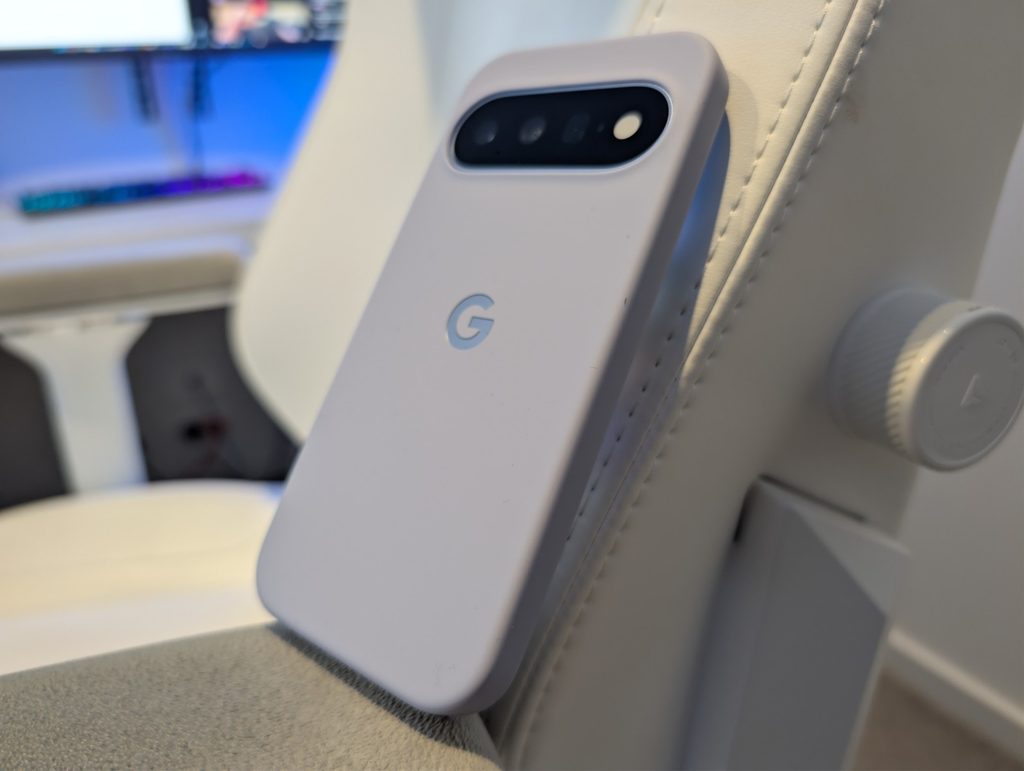
The most significant physical tweak is the camera bar. Google made the bar 40% thinner than earlier base Pixel models, and the glass now runs the full width. The review unit came with an official case, which is what I expect many will opt for, this makes the phone sit flat on a desk instead of rocking.
Given most of us wrap our phones in cases, I don’t think device colours matter nearly as much as the manufacturer wishes they did. For as long as the exterior continues to be made of glass, this will be the reality. The phone is available in Frost, Hibiscus, Pistachio, and Obsidian.
What does not change is the hardware gap to the Pro tier. The Pixel 11 keeps the 6.3″ Actua OLED at 1080 x 2424 resolution, a 60-120Hz refresh rate, and up to 3,000 nits peak brightness. The Pro models step up to Super Actua panels with LTPO technology and 3,600 nits. Outside, the screen is plenty bright enough for the harsh Australian summer glare, and full IP68 water and dust resistance is present.

Performance
Every Pixel 11 model uses Google’s new Tensor G6 processor, paired with 12GB of RAM and fast storage that now starts at 256GB. The headline stats list the chip as 25% faster for web browsing and 15% quicker for app launches compared to the Tensor G5 (at launch), alongside up to 3.5x faster on-device AI.
In daily use, I found this to be a quick phone, although I didn’t have a complaint about last year’s model and that’s why I expect many on a 2-year plan will sit this round out. The phone does feel snappy, apps like the camera launch rapidly, almost instantly, ensuring you have the best chance to capture the moment. Notably, Gemini feel much less laggy than last year.
While performance offers a modest lift over the Pixel 10 on the spec sheet, benchmarks show it behind the Snapdragon 8 Elite Gen 5 and the latest Apple silicon, but the price tag mirrors this. One of my favourite tests is the Pokemon Go app which typically takes many seconds to launch. This launches slightly faster than my 1 year old Pixel 10 Pro XL, and this is the base model, so regular use of social media apps, maps, photography, and light games run beautifully.
It is understood that the Pixel 11 battery capacity is 4,985mAh, with Google quoting over 30 hours of typical use. Real world use shows it easily provides enough endurance for a full day of mixed usage. I’m also impressed by how little it drains overnight, if you are a light user, you could get through a weekend without charging.
Ultimately the software is the real performance story, featuring Android 17 out of the box and seven years of support that keeps the phone feeling fresh long term. The other advantage of having a native Android experience made by the hardware and software manufacture is the devices are eligible for enrolment into the Android beta program if that is something you like exploring.

Features
Google has not reinvented the base Pixel feature list for this generation. It has tightened the bits people actually use and pushed Gemini deeper into the camera and the operating system. The hardware extras that matter day to day include a larger main sensor, faster processing, magnetic wireless charging, and the extra on-device AI headroom in the Tensor G6.
Larger 48MP main sensor
Google fitted a bigger 48MP primary sensor and states it gathers 56 percent more light than the Pixel 10 unit. The ultrawide stays at 13MP, and the telephoto remains a 10.8MP 5x lens, now pushed to 30x Super Zoom. Daylight shots look natural, while nighttime photography is noticeably cleaner.
Magic Capture
This new camera mode records a short clip while the phone hunts for usable stills in the background. You tap once, stay in the moment, and get a set of cropped, de-blurred frames ready to share. It solves a real problem at kids sporting events and birthday parties.
Faster Night Sight
The new image signal processor lets Night Sight capture up to 4.5 times faster than recent Pixel generations without sacrificing quality. In practice, that means far less hovering while the phone stacks frames on a dim footpath at night.
Gemini Intelligence on Tensor G6
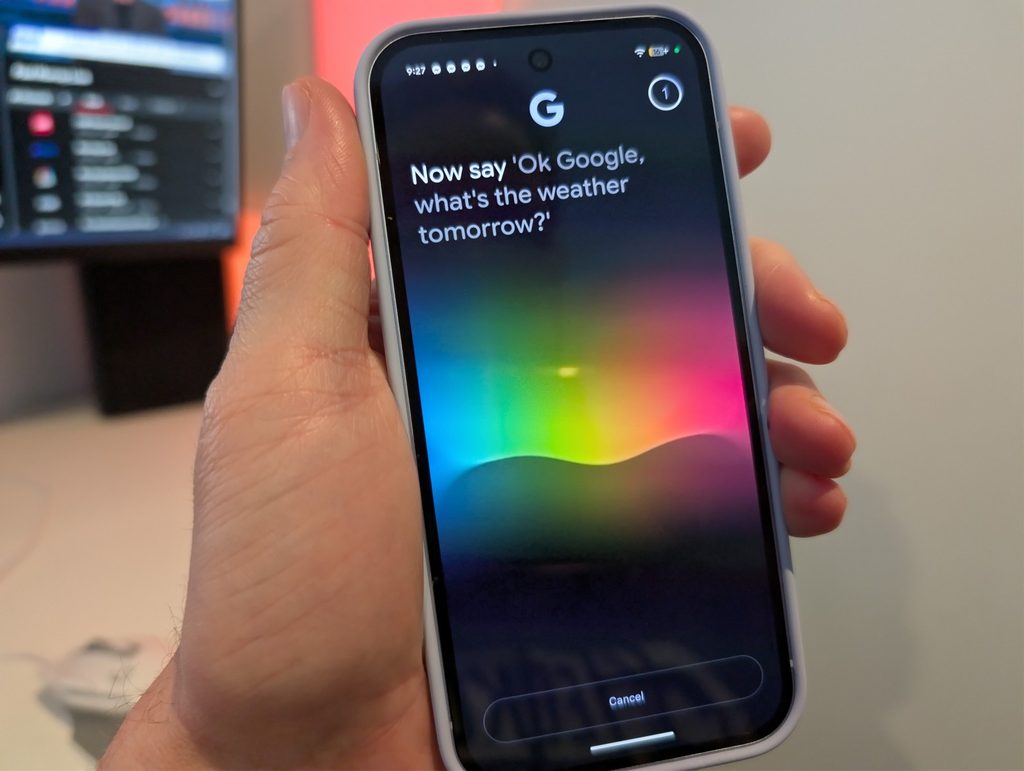
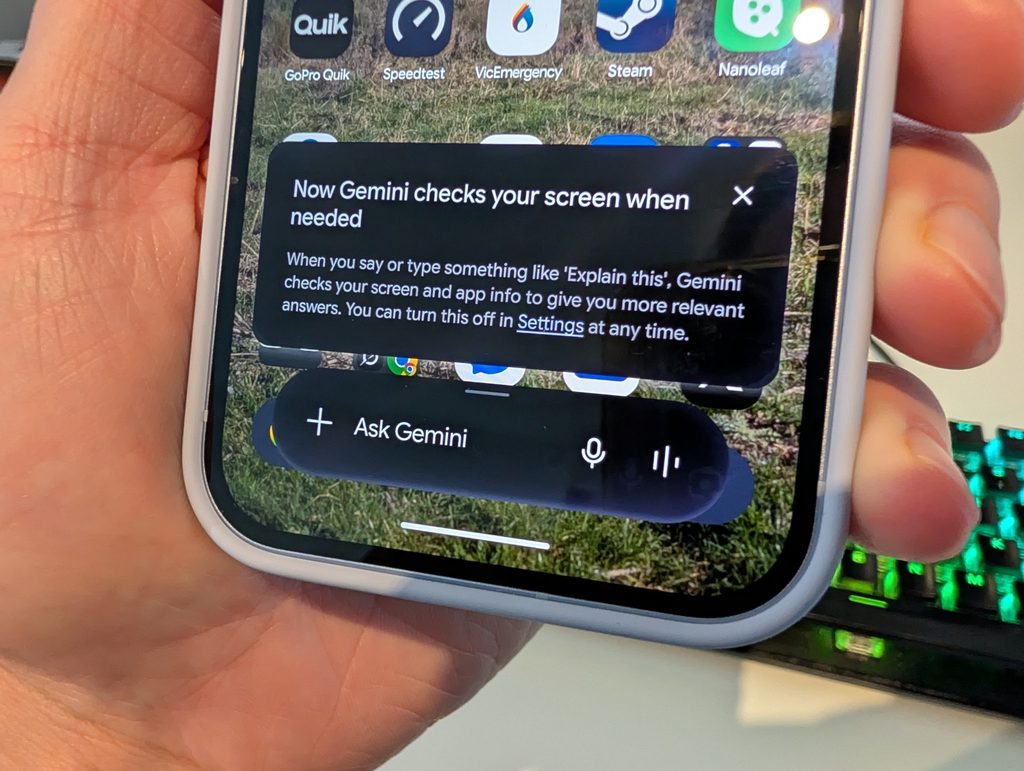
Gemini is much more proactive this year, pulling useful context from Calendar and Gmail to help arrange dinner or check a group chat. Voice dictation is also better at stripping out filler words, making the AI assistance genuinely useful for productivity.
Pixelsnap and Qi 2.2 charging
Pixelsnap magnets are built directly into the chassis, and the Pixel 11 finally supports the Qi 2.2 standard at up to 25W. Magnetic stands, wallets, and car mounts now work natively without requiring a special case.
Seven years of updates
Android 17 ships on day one, accompanied by OS upgrades, security patches, and Pixel Drops promised for seven years from launch. This extended lifespan quietly beats having a marginally faster processor.
Issues and opportunities
While there is a lot to like about this device, not everything is perfect. The starting price now begins at the 256GB storage tier, which is the right storage floor, but it removes the cheaper 128GB door-opener from the market. In Australia, that makes A$1,499 the only way into a new base Pixel. Google needed a clearer hardware leap to justify that as the new headline number.
Wired charging at 30W is also falling behind the rest of the Android flagship market. If the Tensor G6 is more efficient, some of that engineering headroom should have gone into a faster charging brick and a higher charge curve. Overnight charging or relying on the new magnetic pad will be how most people live with it, but a quick top-up before heading out is slower than it should be.
The 1080p Actua panel is perfectly fine and bright, yet it marks another year without the Pro model LTPO range or extra sharpness. A compact phone spends more time outdoors and operated in one hand, meaning it arguably deserved the better glass. Additionally, locking the new HiLight coloured LED ring exclusively to the Pro models feels like a missed opportunity for the base model.
Price and availability
The Google Pixel 11 is on sale in Australia now, following pre-orders that opened earlier in August 2026. Official pricing is set at A$1,499 for the 256GB model and A$1,699 for the 512GB version.That 256GB figure matches last year’s 256GB Pixel 10.
The sting for consumers is the missing 128GB model, meaning the entry ticket is higher even if the like-for-like storage price did not actually move. This feels like a response to the current ram shortage, if they’re going to make a phone, it better be worth it for them, so there’s no doubt some premium included in that price tag.
You can buy the handset outright directly from the Google Store starting at A$1,499. Major retailers like JB Hi-Fi are selling the 256GB models for the same price, often featuring launch bonus bundles. If you prefer to spread out the cost, Telstra, Optus, and Vodafone are all ranging the device with competitive mobile plans and potential trade-in discounts.
I ran a pseudo trade in estimate and if you have a Pixel 10 in good condition, you could get $400 trade-in, making the price tag much easier to stomach. Like wall chargers, we’re rapidly reaching a point where trade-ins are expected to make the economics work.
If you are comparing options inside the family, the Pixel 11 Pro starts at A$1,849, while the Pixel 11 Pro XL starts at A$2,099. Those extra hundreds buy a better screen, stronger cameras, and the new HiLight feature, but they do not change the fact that the base model is the compact Pixel most people will actually carry.
Overall
The Pixel 11 is absolutely worth buying if you want a compact, long-supported Android phone with a camera that stays out of your way. The Gemini features occasionally save you a tap, and the overall experience is polished and reliable. However, it is not worth buying if you expected a massive new design language, flagship gaming performance, or a blazing fast charge-to-full sprint during your lunch break.
It most strongly appeals to Pixel loyalists, one-handed Android users, and anyone who values seven years of guaranteed software updates over winning a spec sheet war. Value for money is acceptable at A$1,499 with 256GB of storage out of the box, and the deal gets much sweeter when a telco discount or retailer bonus is attached.
At full retail against a discounted Pixel 10, the upgrade is decidedly incremental. The phone is very good, offering meaningful daily improvements like Pixelsnap and a thinner camera bar. It is also the clearest example yet that Google is asking its software and AI to do the heavy lifting that major hardware refreshes used to do.